[Spring 2026 GPS] AI: A Bubble, a Boom, or Both?
James Schofield - Jun 29, 2026
What's behind the A.I. rally in the stock market? Find out inside.
If you are a regular reader of business news, you have likely come across headlines featuring these two words: AI and bubble. This debate has persisted for months and intensified during the remarkable run in stock markets from April 1, 2026 (when the ceasefire in the Middle East was announced) through Thursday, June 4. A better than expected U.S. jobs report published on Friday, June 5, rattled markets, increasing the odds that the Federal Reserve will raise rates at its June meeting.
There is no doubt that Artificial Intelligence has emerged as one of the most significant investment themes in global markets. It dominated financial headlines and drove a significant share of market returns, with major technology companies, chipmakers, and related sectors posting rapid share-price gains. But AI is more than a market narrative. This technological transformation is already reshaping how firms operate and how people live. We are already seeing significant investment in semiconductors, cloud infrastructure, data centres, cybersecurity, enterprise software, and automation tools. Today's AI ecosystem is generating significant revenues and profits, unlike earlier market manias.
However, AI adjacent business might be overvalued. Although the internet was revolutionary, many late-1990s internet stocks were overpriced and crashed. The lesson is important: a technological innovation can be real, and investment returns can be underwhelming.
So, are we on a transformational secular boom or a precarious market bubble? Our answer is both! And here is why:
The AI Boom has two strong foundations:
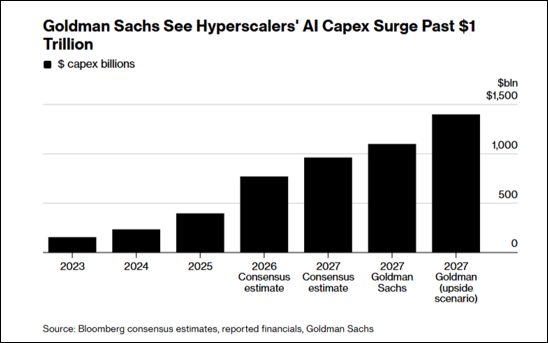
- Infrastructure: Large technology companies are spending hundreds of billions of dollars to build their own AI infrastructure (data centers, chips, memory, cloud platforms, and energy grids). This spending creates substantial revenue opportunities for key suppliers. In 2026, Alphabet, Meta Platforms, Microsoft, and Amazon are collectively expected to spend nearly $700 billion on AI data center infrastructure, and maybe even more next year.
- Enterprise productivity: businesses are exploring ways to use AI to improve efficiency, customer service, research, software development, and decision-making. Over time, these tools may support productivity growth and create new profit pools.
Bubble characteristics:
- Extreme Valuations: High valuations for businesses that have only a small amount of earnings that are currently related to artificial intelligence, but very optimistic prospects for the future.
- Capital Expenditure (CapEx) Scrutiny: As seen before, technology giants are spending hundreds of billions on data centers and chips. It remains to be seen how this massive capital expenditure translates into growth in revenue.
So, in brief, AI is revolutionary, no doubt about that, and we are early, or perhaps very early, in its booming cycle, but certain investments tied to it are likely overvalued.
We think of AI as a long-term structural trend, not a short-term trade. Exposure to innovation can be appropriate but should be combined with valuation discipline, diversification and risk management. Owning high quality businesses with robust balance sheets, meaningful earnings, enduring competitive advantages, and obvious use cases is very different than chasing every company that adds “AI” to its story.