[Fall 2026 GPS] How To Live Happily In Retirement?
James Schofield - Nov 11, 2026
We know most of you know this, but a brief refresher course making the most of your retirement years never hurts.
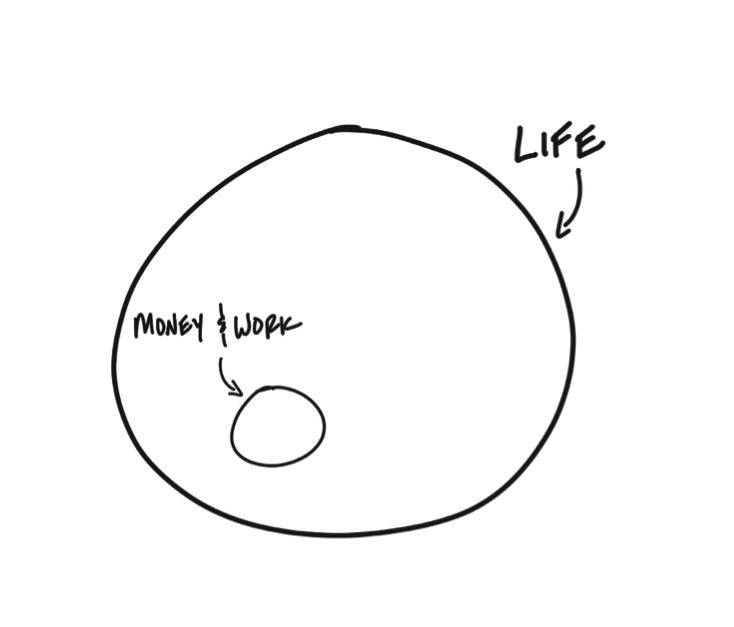
When you hear the word retirement, what comes to mind? We’ve all seen commercials of gray-haired couples sitting on the beach or hiking in the woods with big smiles, but your retirement won’t be all beaches and mountains. Once you lose the sense of usefulness that may come from your work, what will make you excited to get out of bed each morning?
This is a question we encourage you to ask yourself, and I would argue it is more important than how much you can safely draw from your portfolio each year during retirement.
Dr. Michael Finke, a professor of wealth management at the American College of Financial Services, used a survey of 20,000 retirees who were asked a variety of questions that measure life satisfaction.
Finke’s research found the following three strongest predictors of retirement happiness:
- Being Socially Active:
In Finke’s research, social spending had the highest correlation with life satisfaction. He explains, “It’s important to think very carefully about the habits you can develop that will increase your opportunities for social engagement and lower the chances of becoming socially isolated,”. An older Gallup analysis reached a similar conclusion, finding that nearly 70% of participants aged 65 and older who reported engaging in social activity four hours a day described a high level of enjoyment and happiness, compared to 44% of those with zero social time. Finke found that social happiness peaked at 6 hours a day, with 72% reporting high levels of enjoyment. Practical takeaway: Think about the people in your life that you want to have deep, meaningful relationships with and what activities you enjoy doing together.
- Having a predictable source of income:
In another study, Finke compared the spending habits of retirees who had a guaranteed income source (for example, a pension) of about $3,000 a month to those who had no guaranteed income, but enough saved to comfortably withdraw $3,000 a month from their investments. He found that retirees relying on their savings spent far less—about half as much—as those with a guaranteed income source. They also spent far less than was necessary to account for potential market fluctuations. “This is likely because a retiree who gets a regular income payment that will last for a lifetime feels more confident that they have a license to be able to spend money,” Finke explains. “We know many retirees today don’t feel comfortable with the idea of spending down their savings. They would live better—meaning spend more—if they took part of their savings and used it to buy a source of guaranteed income. Practical takeaway: Go through the exercise of financial planning and stress-testing your plan. If your plan shows that you can spend more, challenge yourself to set spending goals. If you had to spend an extra $1,000/month, how would you do it?
- Investing in your health
Following from the importance of social engagement, good health is one of the best predictors of retirement happiness. In his study, retirees who rated their health as good or excellent had a satisfaction rating 58% higher than those who said their health was poor. “By making an investment in your health, you increase the odds that you’ll be able to get the greatest amount of enjoyment from activities in retirement,” Finke explains. “If you save the money, but don’t invest in your health, then the chances are you will get less enjoyment from each dollar saved. That’s why health and financial investments are complementary, because they’re both inputs into activities that provide enjoyment.” Practical takeaway: We generally know what we should be doing to live healthier lives, but it can help to build it into our weekly routines. Here are some less obvious examples and their benefits.
Spend five minutes outside in the morning – Studies show that morning sunlight regulates your body’s internal clock and helps with sleep.
Protect three hours a week for hobbies – These can include learning, volunteering, and faith-based practices.
Invest in close relationships – establish a routine of after-dinner walks with your partner or a weekly phone call to your parents and kids.
Make water your default drink – Have a glass of water with each meal and keep a bottle at your desk.
Build and maintain strength – Strength training is one of the best predictors of longevity. If you’ve never lifted weights, hiring a personal trainer is a great investment; if you have but you’re stuck on what exercises you’ll do, AI is a great resource!