[Spring 2026 GPS] Technical Recession With Decreasing Unemployment!
James Schofield - Jun 29, 2026
A quick overview of current economic indicators and what they mean for Canada going forward.
On Friday, May 29, Statistics Canada reported that the economy stalled in the first quarter of the year. Real gross domestic product (GDP) fell 0.1% on an annualized basis in the first three months of the year, following a 1% contraction in the fourth quarter of 2025. A decline in GDP for two consecutive quarters is called a "technical recession”. The last time Canada recorded two consecutive quarters of negative growth was in 2020 during the COVID-19 pandemic. Before that, it was in 2015 amid low oil prices.
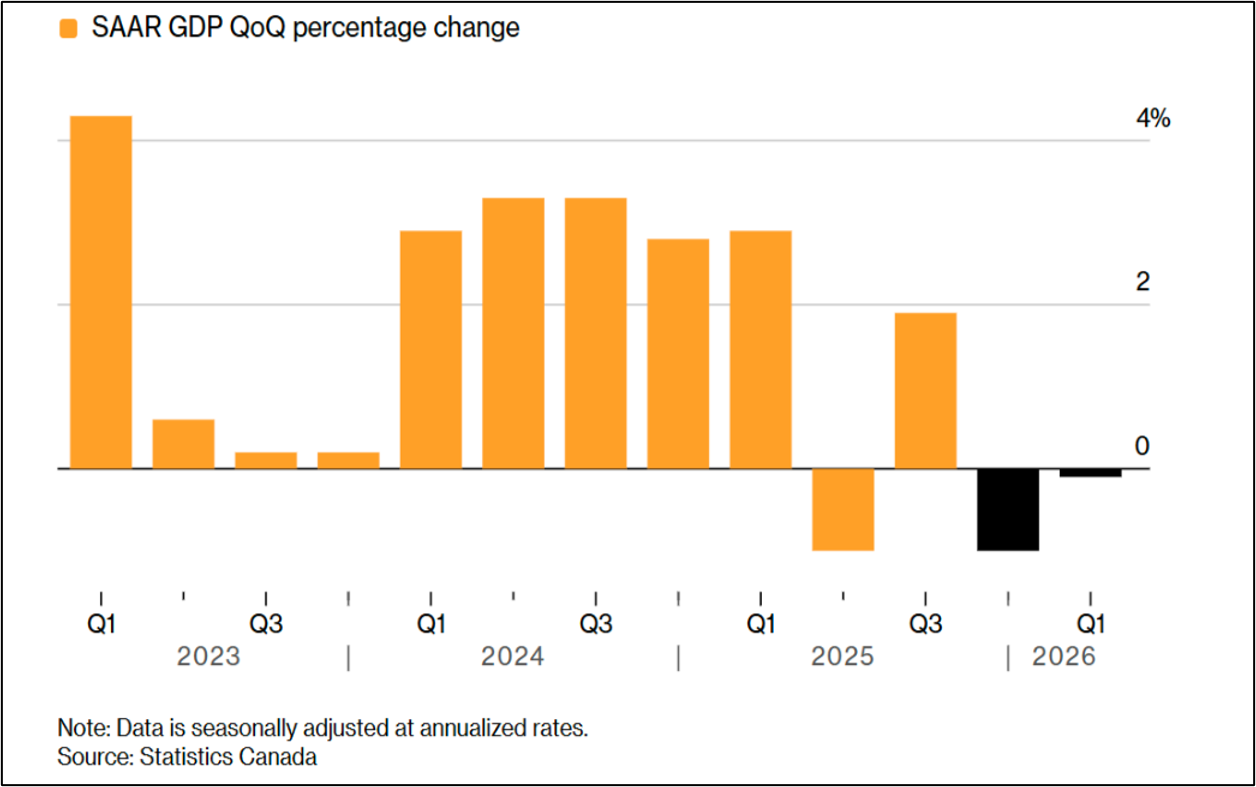
While declining GDP is unwelcome, it’s worth noting that the figures are heavily skewed by immigration. Ramped-up immigration masked an underlying productivity issue in Canada for years. Now, with the population declining, economic weakness is becoming more apparent.
To address productivity weaknesses, economies typically need a mix of increased capital investment, fewer regulatory barriers, tax reform, and innovation. Thankfully, Canada’s labour market defied expectations with robust job gains in May, offsetting losses from the first four months of 2026 and showing signs of improvement.
Surprisingly, on June 5, Statistics Canada reported that the economy added 88,000 jobs in May, topping economists’ expectations for a gain of 10,000 positions. Unemployment rate fell to 6.6% last month, down from 6.9% in April. The gains for May were the first significant increase in employment since November. The economy had shed 112,000 net jobs through April 2026.
Some economists argue that the surprise in the job numbers and the reduction in unemployment muted the economic impact of the technical recession. However, we believe the Canadian economy is fundamentally weak and that it will take several years before Canada can prove itself a significant participant in the global economy's growth. We have high hopes for Canada, but with that hope, we acknowledge that there is still a lot of work for Canada to do to shake off a decade of low productivity and growth. We are seeing signs that things are changing, such as foreign investment returning to Canada, diversifying trade ties beyond our Southern neighbours, and increased investment in defence, AI, and infrastructure.